
Gentle, thoughtful dental care for children
From their first visits and preventive care to paediatric expertise when they need a little more help.
At 42 The Dental Practice, we want children to grow up feeling comfortable and confident about visiting the dentist.
Every child is different. Some are naturally relaxed; others need more time to become familiar with new surroundings, new people and having their teeth examined.
We take time to listen, explain things in ways children can understand and allow them to become comfortable at their own pace.

Children’s dentistry
Children don’t need to have a dental problem to see us.
Regular visits allow us to monitor the development of your child’s teeth, recognise problems early and help them develop the knowledge and habits that support good oral health throughout life.
We provide routine examinations and preventive care, treatment when needed, dental trauma care and additional paediatric expertise for children who need a little more help.
We recommend introducing your child to the dentist when their first teeth appear, or by their first birthday. Early visits help children become familiar with the practice before there is necessarily anything that needs treating.
Looking after developing teeth at home is equally important. Teeth should be brushed twice a day with an appropriate fluoride toothpaste from the time they first appear. We can offer practical advice about brushing, diet and caring for your child’s teeth between appointments.
Where appropriate, fluoride varnish can help strengthen tooth enamel, while fissure sealants can protect the harder-to-clean grooves of the back teeth.
The aim is not simply to look after children’s teeth today, but to help establish a comfortable relationship with dentistry that can continue into adult life.
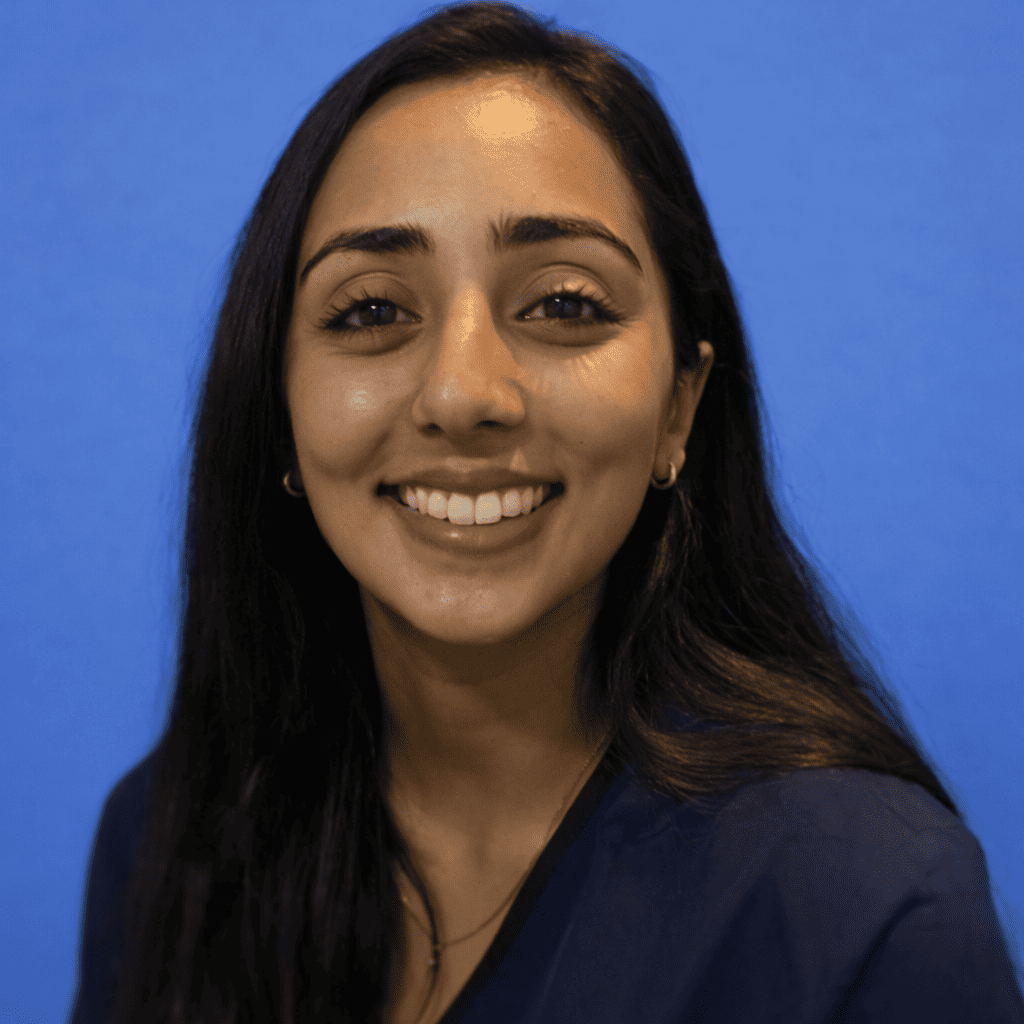
MChD/BChD, MClinDent (Paediatric Dentistry)
Ravina has completed three years of postgraduate training in Paediatric Dentistry and has particular experience caring for anxious children, dental trauma and children with additional needs.
More about Ravina
She is undertaking further advanced training at the Eastman Dental Institute towards becoming a Consultant in Paediatric Dentistry.
Her approach is gentle and child-centred, giving children the time they need to understand what is happening and develop confidence in their own way.
What if my child is nervous about the dentist?
Some children need a little more time.
A child may be naturally anxious, have had a difficult previous experience or simply find unfamiliar surroundings and sensations overwhelming.
We don’t believe in rushing a frightened child simply because an appointment has been booked.
Sometimes a successful first visit may simply mean meeting us, becoming familiar with the practice and discovering that there is nothing to be frightened of.
Ravina has particular experience caring for anxious children and uses behavioural techniques to help them gradually become comfortable with dental treatment. Where appropriate, inhalation sedation can also be considered.
When might paediatric expertise be helpful?
Most children need nothing more than routine dental care and prevention.
Sometimes additional paediatric experience can be helpful, including for:
- Significant dental anxiety
- Previous difficulty accepting treatment
- Dental trauma or damaged teeth
- More complex treatment needs
- Neurodiverse children or children with additional needs
- Treatment where inhalation sedation may be appropriate
- Problems involving developing teeth
We will always explain what we have found, the available options and whether treatment is actually necessary before deciding together how best to proceed.
Dental trauma
Falls, sports and everyday accidents can result in children chipping, breaking, loosening or knocking out a tooth.
What should be done depends on your child’s age, the type of injury and whether a baby or adult tooth has been affected.
If your child has injured a tooth, contact us as soon as possible so that we can advise you whether they need to be seen urgently.
As children grow
Children’s dentistry is also about watching how the teeth and jaws develop.
Regular examinations allow us to recognise when an orthodontic opinion might be helpful.
Where appropriate, our children’s dentist and orthodontist can work together within the practice, allowing different aspects of your child’s development to be considered together rather than in isolation.
Specialist expertise when it is needed
Most childhood dental care is straightforward. Occasionally, a problem involves more than one area of dentistry.
As a multidisciplinary practice, our clinicians can discuss your child’s care together when helpful, while keeping treatment as simple as possible.
We only recommend treatment when we believe it is necessary, appropriate and in your child’s best interests.
Children’s dentistry in Notting Hill
42 The Dental Practice is at 42 Pembridge Road, a short walk from Notting Hill Gate.
We provide routine children’s dentistry and paediatric dental care for families in Notting Hill, Holland Park, Kensington and surrounding West London.
Children can come to us directly with their parents or be referred by their own dentist for a paediatric opinion or particular course of treatment.
Frequently asked questions
When should my child first visit the dentist?
We recommend introducing your child to the dentist when their first teeth appear, or by their first birthday.
Early visits help children become familiar with the experience before there is necessarily anything that needs treating. They also allow us to monitor developing teeth and discuss prevention with parents.
Does my child need to have a problem to see you?
No. We welcome children for routine examinations and preventive care, as well as those requiring more complex paediatric treatment.
What is paediatric dentistry?
Paediatric dentistry is the area of dentistry concerned specifically with the oral health, dental development and treatment of babies, children and young people.
What if my child is frightened of the dentist?
Tell us before the appointment if you can. We can give your child time to become familiar with us and the practice rather than assuming treatment needs to happen immediately.
For some children, building confidence over more than one visit may be more appropriate.
Do you see neurodiverse children and children with additional needs?
Yes. Every child communicates, experiences their surroundings and responds to dental treatment differently.
Please tell us about your child before their appointment so that we can consider how best to make their visit comfortable.
Do you offer sedation for children?
Inhalation sedation may be appropriate for some children who find dental treatment particularly difficult. It would only be recommended following an assessment and discussion with you.
What should I do if my child knocks or breaks a tooth?
Contact us as soon as possible. Dental injuries vary considerably, and the appropriate treatment depends upon the injury and whether a baby or adult tooth has been affected.
If an adult tooth has been completely knocked out, contact a dentist immediately, as this is a dental emergency.
When might my child need to see an orthodontist?
Children develop at different rates, and not every irregularity requires treatment.
We monitor dental development and can recommend an orthodontic opinion if and when we think it would be useful.
Do I need a referral?
No. Parents can contact us directly.
We also welcome referrals from other dentists for paediatric opinions and treatment. Where a child has been referred, we will communicate with their dentist and support the care they continue to provide.
Update your browser to view this website correctly.Update my browser now